Jul 16, 2026
Gemstone and Diamond Sales for Serious Buyers
A diamond can look exceptional under display lighting and still be a poor buying decision if its paperwork, condition or setting has not been properly checked. That is why gemstone and diamond sales need more than a quick look at carat weight and a bid placed on instinct. Buyers need enough information to judge what is being offered, while sellers need a clear way to present valuable jewellery and loose stones to serious interest.
Auction can be an effective way to buy or sell diamonds, coloured gemstones, jewellery collections and individual high-value pieces. It creates a defined sale period, puts stock in front of a broader buying audience, and lets the market determine demand. The result, however, depends on accurate descriptions, sensible expectations and a transparent understanding of fees and terms.
What determines value in gemstone and diamond sales?
There is no single price guide that can value every diamond, sapphire, emerald or ruby. Two stones of the same size can have vastly different values because quality, origin, treatment, cutting and supporting documentation all matter.
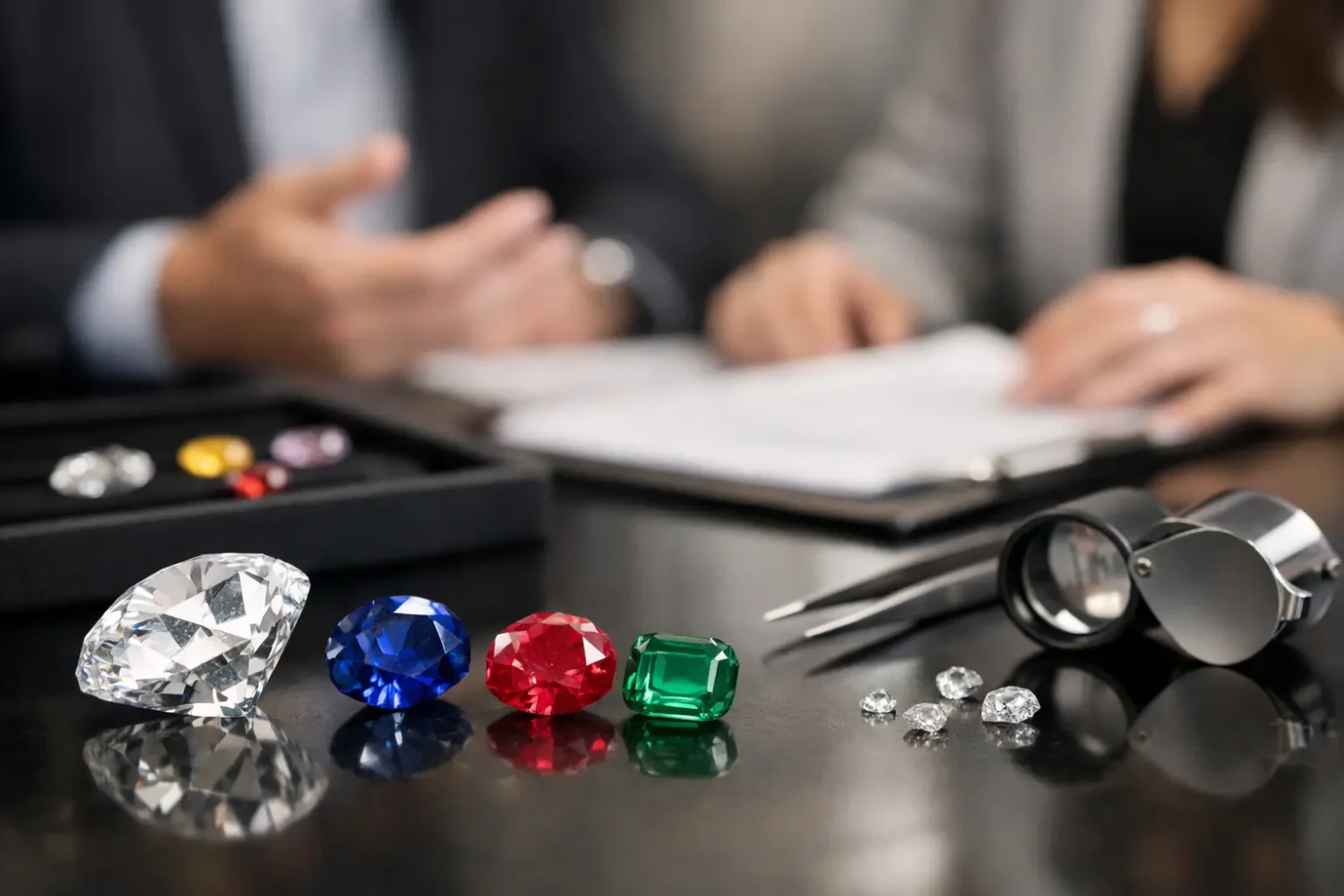
For diamonds, buyers commonly assess the four Cs: carat, cut, colour and clarity. Carat tells you weight, not beauty. A well-cut diamond can appear brighter and more appealing than a heavier stone with poor proportions. Colour and clarity affect value, but the practical difference between grades may not always be obvious without magnification or specialist comparison.
Coloured gemstones require a different approach. Colour is often the main value driver, with hue, saturation and tone affecting desirability. A vivid blue sapphire, richly coloured ruby or clean emerald can command strong interest, but buyers should also consider inclusions, durability, treatments and whether the claimed origin is supported by a recognised laboratory report.
The jewellery itself matters as well. A diamond set in a signed antique ring, a quality gold bracelet or a well-made contemporary piece may carry value beyond the central stone. Metal type, total weight, craftsmanship, brand, age and condition can all influence bidding.
Documentation is not a formality
A grading report or valuation is useful, but buyers should understand what it does and does not prove. A diamond grading report usually records measurable characteristics and may confirm whether the stone is natural or laboratory-grown. A coloured gemstone report can identify species, variety and detectable treatments, and may offer an opinion on origin where testing supports it.
Not all documents carry the same weight. Check who issued the report, its date, report number and whether it clearly relates to the item being sold. Where a loose diamond has a laser inscription, that number should match the accompanying report. For mounted jewellery, the report may relate to a stone before setting, so measurements and descriptions need to align sensibly with the finished item.
A valuation is different from a grading report. Insurance replacement valuations can be higher than likely auction realisation because they reflect replacement cost, retail margins and the difficulty of sourcing an equivalent item. Treat a valuation as supporting information, not a guaranteed sale price.
Sellers should provide every relevant document available, including certificates, valuations, receipts, service records for watches where applicable, and details of any known repair or alteration. Clear information gives bidders more confidence and reduces uncertainty that can hold bids back.
Condition and treatments need plain disclosure
Jewellery is often sold after years of wear, and that is not automatically a problem. It does need to be described honestly. Worn claws, loose settings, chipped stones, resized rings, worn plating, scratches and repairs affect the practical cost of ownership. A buyer may accept those issues at the right price, but should know about them before bidding.
Treatments are particularly relevant in coloured gemstone sales. Heat treatment is common in sapphires and rubies. Emeralds are often clarity enhanced with oils or resins. Other treatments may include diffusion, fracture filling, dyeing or coating. These practices do not necessarily make a gemstone unsaleable, but they can materially affect value, care requirements and buyer expectations.
Natural, laboratory-grown and imitation stones must also be clearly distinguished. A laboratory-grown diamond has the same core chemical structure as a natural diamond, but it occupies a different market and usually has a different resale profile. A synthetic sapphire is not the same as a natural sapphire. Straight descriptions protect both sides of the transaction.
How to buy with discipline at auction
Before placing a bid, read the lot description and sale conditions from start to finish. Confirm whether the item is offered with a reserve, whether GST applies, when payment is due, collection arrangements and the buyer's premium. At NextGen Auctions & Marketplace, the buyer's premium is a flat 10%, with no sliding scales or hidden vendor charges. Buyers should include that premium, plus any applicable GST and freight or insurance costs, in their maximum price.
If inspection is available, use it. Viewing jewellery in person lets you assess scale, setting security, visible wear and overall presentation. For a live auction, arrive prepared and know your maximum. For an online timed auction, do not assume a leading bid will hold. Late bidding is common, so set a ceiling based on your own assessment rather than chasing the lot because another bidder has shown interest.
Ask practical questions before the auction closes. Is the stone accompanied by a report? Is the ring stamped for metal purity? Are there visible inclusions, chips or repairs? Does the description state a total diamond weight or the weight of a single centre stone? A total weight can include many small accent diamonds, which is very different from one diamond of the same combined carat figure.
Buying sight unseen can still suit experienced buyers where photography, documentation and condition reporting are thorough. For a significant purchase, though, the trade-off is simple: more independent verification generally means less uncertainty. If information is limited, bid accordingly.
How sellers can create stronger competition
The strongest gemstone and diamond sales start with accurate cataloguing. Sellers should avoid broad claims such as “rare”, “investment grade” or “flawless” unless they can be substantiated. A straightforward description of metal, gemstone type, estimated or documented weights, measurements, hallmarks, condition and accompanying paperwork is more useful to serious buyers.
Photography should show the whole item as well as close detail. Include the face of the jewellery, side profile, clasp or shank, hallmarks where visible, and any wear or damage. Loose gemstones benefit from images against a neutral background, along with clear dimensions and report details. Good images do not replace inspection, but they help bidders decide whether a lot deserves closer attention.
Reserve setting deserves care. An unrealistic reserve can prevent an item from selling even where genuine demand exists. A reserve that reflects documented quality, condition and current buyer appetite gives the auction a better chance of building momentum. It depends on the piece: a signed vintage item, an exceptional certified diamond or a high-quality coloured stone may justify a firmer expectation than an unbranded item with limited documentation.
Timing can also matter. A single estate piece may attract attention in a specialised valuables auction, while a larger jewellery collection may benefit from being catalogued into individual lots so buyers can target the items they actually want. Grouping can reduce handling, but it may narrow the bidding pool.
Live and online auctions serve different buyers
Online auctions offer national reach and allow buyers to participate without travelling. This is particularly useful for sellers outside major metropolitan areas or for buyers seeking a specific stone, jeweller or style. Detailed cataloguing becomes even more important when bidders cannot inspect every lot in person.
Live auctions bring a different strength: immediate competition in the room, the ability to inspect prior to bidding, and the familiar pace many collectors and jewellery buyers prefer. Some lots suit this setting because buyers want to see brilliance, proportion and craftsmanship with their own eyes before committing.
Neither format is automatically better. The right choice depends on the value of the item, the available documents, buyer location and whether physical inspection is likely to lift confidence. A sale process that is clear on fees, condition and bidding rules gives both formats a fairer chance of delivering a sound result.
A well-presented gemstone or diamond should not rely on hype to attract bids. Give buyers the facts, allow proper inspection where possible, set expectations sensibly and let informed competition do its job.